
If you want the short answer: eat more protein when dieting, and enough protein when building muscle. For most people, that means 1.6–2.4 g/kg (0.7–1.1 g/lb) for fat loss and 1.6–2.2 g/kg (0.7–1.0 g/lb) for muscle gain.
Here’s the simple version:
- Weight loss: protein helps you keep muscle while eating in a calorie deficit
- Muscle gain: protein helps you build muscle when training and eating at maintenance or in a surplus
- Best daily range for fat loss: 1.6–2.4 g/kg
- Best daily range for muscle gain: 1.6–2.2 g/kg
- A strong target during a cut: about 1.9 g/kg (0.9 g/lb)
- Meal split for muscle gain: 3–5 meals with 20–40g per meal
- Older adults may need more: about 1.2–1.5 g/kg just to hold muscle
- Protein can help with hunger: high-protein diets cut daily intake by about 441 calories
- Protein burns more calories during digestion: about 20%–30%, vs. 5%–10% for carbs and 0%–3% for fat
If you’re cutting, protein works like muscle insurance. If you’re bulking, protein gives your body the raw material to grow. That’s the main difference.
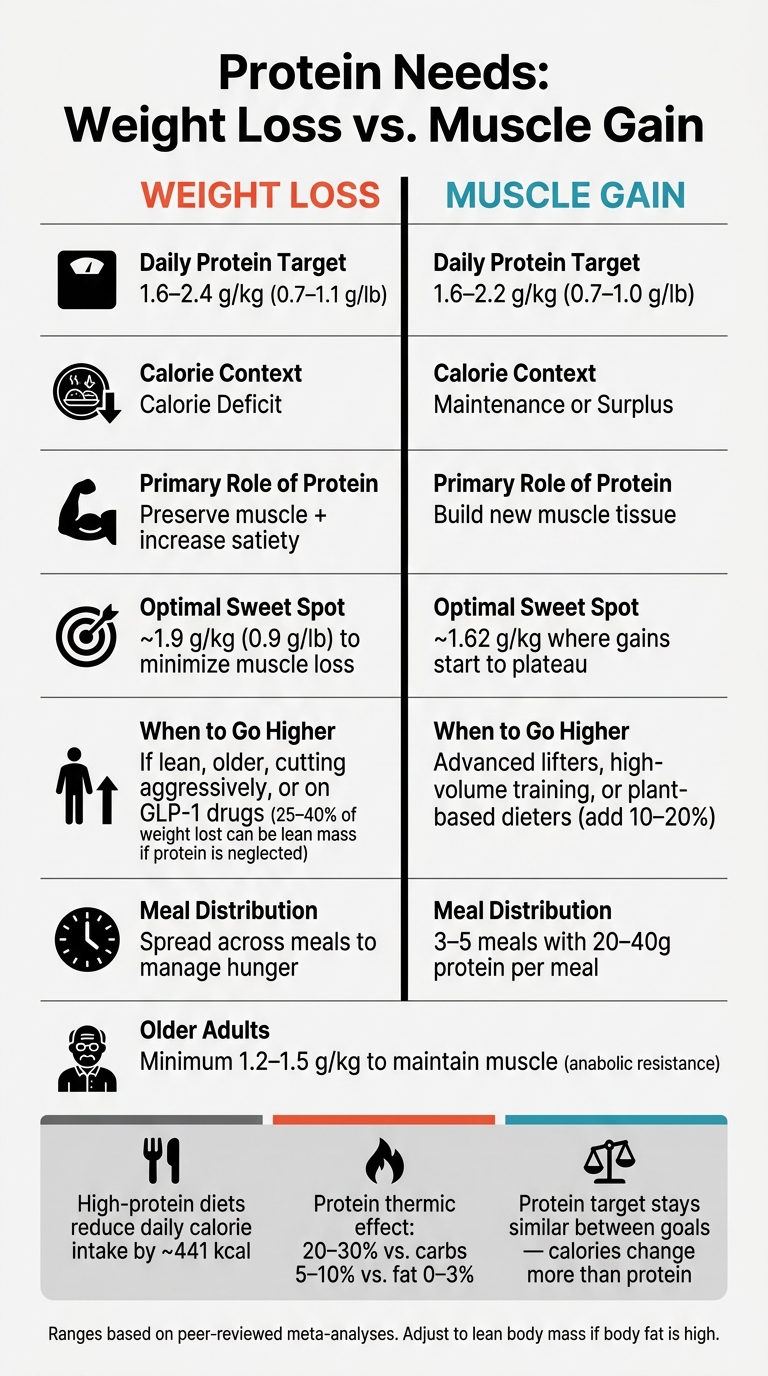
Dietitian answers: optimal protein intake for your goals
Quick comparison
| Goal | Daily Protein | Calorie Intake | Main Job of Protein | Best time to go higher |
|---|---|---|---|---|
| Weight loss | 1.6–2.4 g/kg (0.7–1.1 g/lb) | Deficit | Keep muscle, help fullness | If you’re lean, older, or cutting hard |
| Muscle gain | 1.6–2.2 g/kg (0.7–1.0 g/lb) | Maintenance or surplus | Build new muscle | If training volume is high or plant-based |
Bottom line: you usually don’t need a totally different protein plan for each goal. Calories change more than protein does. But during fat loss, going toward the top end can help limit muscle loss.
Protein needs for weight loss
When you’re in a calorie deficit, your body is more likely to use muscle for energy. That’s why protein needs go up compared with maintenance.
How much protein to eat in a calorie deficit
A solid fat-loss target is 1.6–2.4 g/kg of body weight per day - or about 0.7–1.1 g/lb. If you’re active and dieting, a common target is 0.8–1.2 g/lb of lean body mass.
There’s a good reason these numbers show up so often. A recent meta-regression found that the strongest effect for keeping fat-free mass during a calorie deficit showed up at about 1.9 g/kg (0.9 g/lb).
If you’re leaner, older, or cutting calories more aggressively, it makes sense to stay near the top end of the range. As researchers Amy J. Hector and Stuart M. Phillips put it:
“The leaner an individual is, the more susceptible they will be to LBM [lean body mass] loss.”
That’s the key issue during a cut: holding onto muscle gets harder when calories drop.
Why more protein helps when calories are lower
Higher protein helps in a deficit for three main reasons.
- It helps protect muscle. Protein can help offset the drop in muscle protein synthesis that happens during a calorie deficit.
- It helps with hunger. Protein affects hormones tied to fullness and appetite, including GLP-1, PYY, CCK, and ghrelin. In plain English, it can make dieting feel a lot more doable. High-protein diets have been shown to reduce spontaneous daily calorie intake by an average of 441 kcal compared with lower-protein diets.
- It burns more calories during digestion. Protein has a thermic effect of 20%–30%, compared with 5%–10% for carbs and 0%–3% for fat.
Older adults have one more thing to deal with: anabolic resistance. That means muscle becomes less responsive to protein over time. For adults over 60, 1.2–1.5 g/kg is often the minimum needed to maintain muscle.
Using Welling to track a weight-loss protein goal
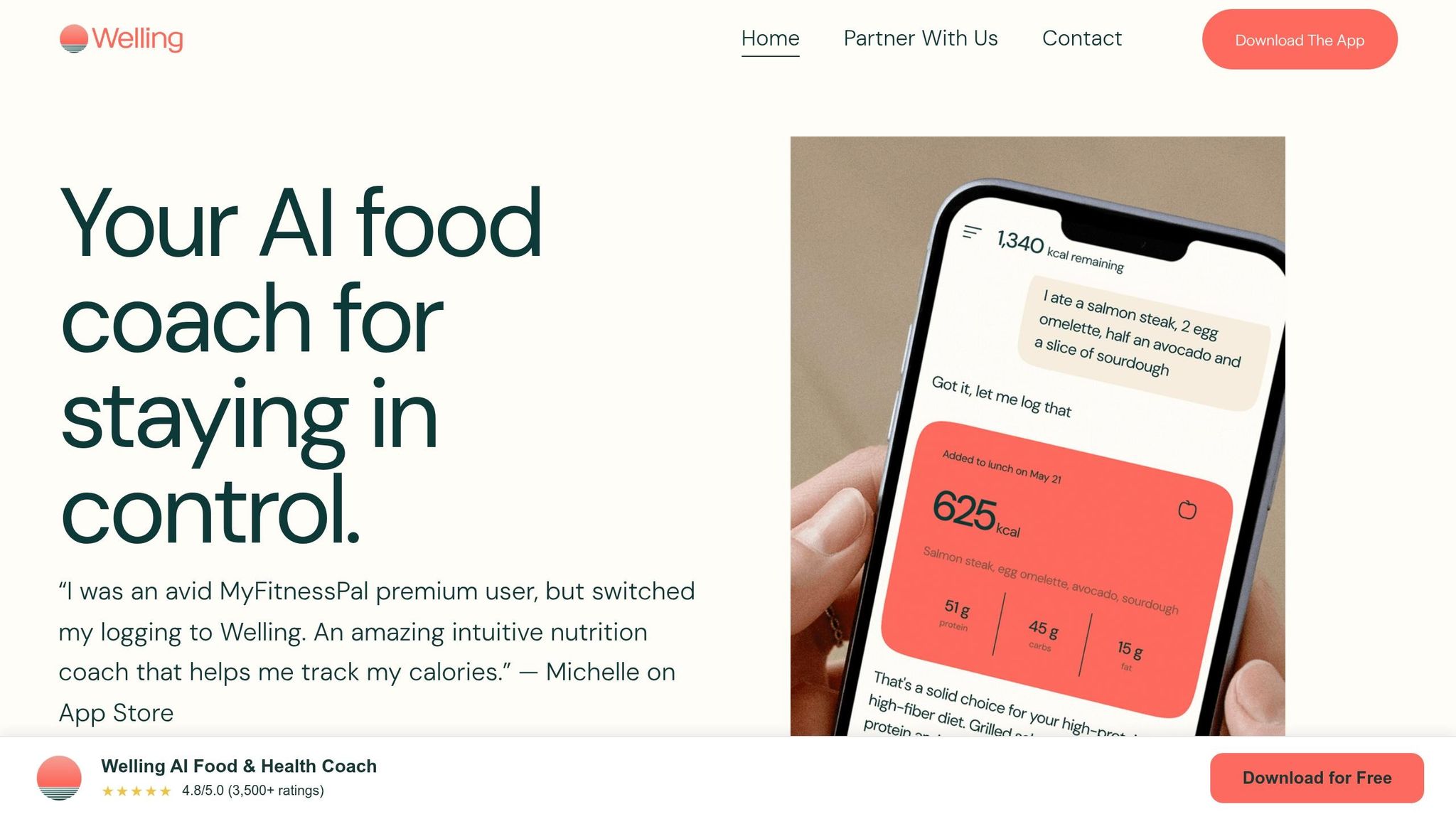
Welling lets you log meals by photo or chat and tracks calories and macros automatically. That can make it much easier to stay on top of a higher protein target during a cut.
Muscle gain calls for a different protein target because calories are no longer restricted.
Protein needs for muscle gain
How much protein to eat when building muscle
When you’re trying to build muscle, protein needs to do more than help you hold on to what you already have. It needs to support new growth.
For most adults who lift weights, 1.6–2.2 g/kg per day - or about 0.7–1.0 g/lb - is enough for most hypertrophy goals. Research points to a pretty clear range here. In a meta-analysis of 49 studies, about 1.62 g/kg/day was the point where added gains started to level off.
If you carry more body fat, it makes more sense to base your target on lean body mass (LBM) instead of total body weight. That helps you avoid overshooting your protein goal. It also changes your daily target, how you split protein across meals, and how you log your intake.
Meal timing, distribution, and training
Daily protein intake matters most. Still, meal distribution isn’t just noise.
Spreading protein across 3–5 meals with around 20–40g of protein per meal works better for muscle protein synthesis than cramming most of it into one or two meals. Think of it like feeding the process in steady doses instead of dumping everything in at once.
Protein helps build muscle, but it doesn’t do the job by itself. Resistance training is what tells your body to grow. Progressive overload is the main training driver, and protein gives your body the raw material to respond to that work.
After you set the target and decide how to spread it through the day, the next step is simple: track it in a way you can stick with.
Using Welling to track a muscle-gain protein goal
Welling can help you track a muscle-gain protein target with photo and chat-based logging, macro tracking, and weekly feedback. MacroFactor and Carbon Diet Coach are coached alternatives, but Welling is faster to use day to day. That can make it easier to compare this target with a weight-loss target next.
Here’s the difference at a glance:
| Feature | Muscle Gain | Weight Loss |
|---|---|---|
| Protein Target (g/kg) | 1.6–2.2 g/kg | 1.6–2.4 g/kg |
| Protein Target (g/lb) | 0.7–1.0 g/lb | 0.7–1.1 g/lb |
| Calorie Context | Maintenance or surplus | Calorie deficit |
| Primary Role of Protein | Build new muscle tissue | Preserve existing muscle, increase satiety |
| Expected Outcome | Increased lean mass and strength | Fat loss with minimal muscle loss |
Weight loss vs. muscle gain: protein targets side by side
Daily targets, calorie context, and expected outcomes
The main split is straightforward: during weight loss, protein helps you hold on to muscle. During muscle gain, it helps you add muscle.
Here’s the side-by-side view:
| Feature | Weight Loss | Muscle Gain |
|---|---|---|
| Daily Protein Target | 1.6–2.4 g/kg (0.7–1.1 g/lb) | 1.6–2.2 g/kg (0.7–1.0 g/lb) |
| Energy Balance | Calorie deficit | Maintenance or surplus |
| Main Objective | Preserve lean mass, increase satiety | Support muscle growth |
| Expected Outcome | Fat loss with minimal muscle loss | More lean mass and strength |
In plain English: if you’re eating less and trying to lose fat, protein acts like muscle insurance. If you’re eating at maintenance or in a surplus and trying to grow, protein gives your body the raw material it needs to build.
Use the upper end of the range when muscle loss is more likely.
When to use the higher end of the range
You don’t always need to max out protein. But some cases make the higher end a smart move.
For weight loss, go higher if you’re already lean, cutting calories more aggressively, older, or using GLP-1 drugs like Ozempic or Wegovy. That matters because 25%–40% of weight lost on these drugs can come from lean mass when protein and resistance training are neglected. That’s a big chunk, and it’s exactly why protein intake can’t be an afterthought. If that’s you, our best macro tracker for GLP-1 users breakdown covers which apps handle a protein floor properly.
For muscle gain, most people don’t need more than 2.2 g/kg. Past that point, more protein usually isn’t doing much. The main exception is advanced lifters running high-volume training blocks, who may aim for the top of the range. Vegans and vegetarians may also need to go 10%–20% higher than standard targets because plant proteins tend to have lower leucine content and lower digestibility.
Welling vs. other tracking apps for different goals
This is where Welling tries to make life easier.
A lot of tracking apps make you do the math yourself. You pick a goal, then manually enter calories and macros and hope you got it right. Welling handles that switch for you. If you move from weight loss to muscle gain, the app updates protein and calorie guidance based on that goal, without the manual setup.
It also uses photo and chat logging, which means less typing and fewer chances to drift off plan. That’s one clear difference compared with apps that still lean on full manual macro setup.
| Feature | Welling | Traditional Manual Trackers |
|---|---|---|
| Auto-adjusts protein targets by goal | Yes | Usually no |
| Photo + chat logging | Yes | Often no |
| Real-time coaching feedback | Yes | Usually limited |
| Weekly insights | Yes | Often limited |
| Setup required for macro targets | Minimal | More manual |
If your goal changes, your targets should change too. That’s the whole point.
How to choose and hit the right protein target
Once you know your daily target, the next step is simple: pick foods and a tracking method that help you hit it without making your diet a chore.
Best protein foods for weight loss and muscle gain
Food choice matters more during weight loss because calories are tighter. Lean options like chicken breast, egg whites, white fish, Greek yogurt, and tofu give you more protein for fewer calories. That makes it much easier to stay within your calorie budget while still reaching 1.6–2.4 g/kg - the same weight-loss range covered earlier in this guide.
During muscle gain, you have more flexibility. Foods like salmon, whole eggs, and chicken thighs still give you plenty of protein, but they also help you reach the extra calories that a surplus calls for. In practice, the easiest move is to choose protein foods that fit your calorie needs, then build the rest of your diet around them.
How to adjust protein when your goal changes
When your goal changes, protein usually changes less than calories and food choices. In most cases, protein stays in about the same range, while calories, carbs, and fats shift more. If you move from a deficit to a surplus, you’re usually eating more from carbohydrates and fats, not rebuilding your whole protein plan.
Your protein sources may change, though. During a fat-loss phase, leaner foods often make life easier. During a muscle-gain phase, more calorie-dense picks can fit better. If you’re using Welling, switching your goal in the app updates your calorie guidance and macro targets automatically.
Key points to remember
- Weight loss often calls for 1.6–2.4 g/kg (0.7–1.1 g/lb) to help protect muscle during a calorie deficit with the right movement.
- Muscle gain works well at 1.6–2.2 g/kg (0.7–1.0 g/lb).
- Daily protein intake matters most. Timing and food source still matter, but hitting your daily gram target again and again is the main job.
- Tracking with Welling or another app can make it easier to stay on target as your goal changes. Our best macro tracker for cutting and best macro tracker for muscle gain rankings show which apps handle each phase best.
FAQs
Should I use body weight or lean body mass?
For most people with normal or moderate body fat, using total body weight is a simple and effective way to set protein targets.
If you have a high body fat percentage, lean body mass gives you a more accurate number and can help you avoid estimating too much protein. And if that sounds like a hassle, Welling can make it easier with personalized macro tracking and daily protein guidance based on your weight loss or muscle gain goal.
Can I build muscle and lose fat at the same time?
Yes - you can build muscle and lose fat at the same time, especially if you pair resistance training with a high-protein diet.
Research suggests that 1.6 to 2.4 grams of protein per kilogram of body weight can help preserve lean tissue and support muscle growth while you’re in a calorie deficit.
That’s where Welling can help. It tracks calories and macros, which makes it easier to stay on target with your protein and overall intake.
Do I need protein shakes to hit my target?
No. Protein shakes are a convenience food, not something you have to use.
You can hit your protein target with whole foods like meat, fish, eggs, dairy, and plant-based options. For a lot of people, that’s more than enough.
That said, shakes can still be handy. If you’re busy, traveling, or just have a hard time getting enough protein from meals, they can make things easier.
Welling can help you track your daily protein and macros so you can stay consistent with your goal.